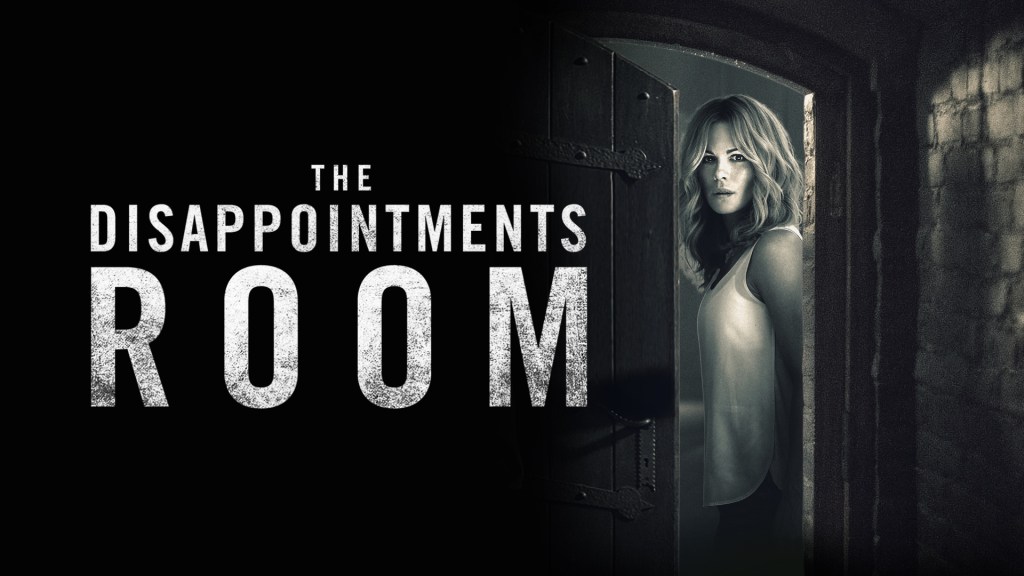
I have just recently watched the movie The Disappointments Room for a research project on disability tropes I’m working on. I’ll give it two stars because watching the beautiful Kate Beckinsdale do anything is a treat.
As far as disability representation goes, though, this movie is a dud. Disability acts more as set dressing. Don’t get me wrong, I loved seeing disability references and imagery sprinkled throughout the first half of the film: Lucas (the son) playing with his father in Wolverine and Hulk costumes and mentioning mutants out loud, yellow wallpaper, the statue in the garden missing limbs, a throwaway joke line about “zombie rednecks” (gotta love the rural inbreeding stereotype), etc. However, this is about as deep as it goes.
The plot of this movie is nearly incoherent. It’s unclear whether the unnamed girl born with a deformity and kept in the titular disappointment room is haunting the house with her grief, or her terrible father just maintaining a demonic presence is the reason for the haunting. The titular concept of a disappointment room is hardly explored at all, save for a visit to the county archives where a plucky paranormal investigator lady shares all her research on the house. All she shares, though, ends up being conveyed in short shots of book pages covering historic cases of disappointment rooms that don’t pertain to the actual family in this story (and that I doubt the average viewer paused to read). All we learn about the Blackers that originally owned the house is that the patriarch was a judge.
Unfortunately, this movie follows the pattern of many before it in which this horrifying history is just used as a vehicle to a haunted house. The haunted house is merely a catalyst for Kate’s character, Dana, to confront her own internal struggles. The real core story of the film follows her journey through grief, motherhood, and mental illness. It also doesn’t do that part particularly well, either.
Mental illness and madness are very relevant to disability studies, but this movie doesn’t explore them well. Essentially, Dana’s mental state is conveyed through hallucinations mixed with paranormal flashbacks that make it impossible to tell where reality begins and ends. Although this puts the viewer in Dana’s seat, confusing us, the paranormal element just seems to undermine the other hallucinations. When madness is compared and equated to a spooky haunting it is pretty reductive.
In a scene that baffles me, Dana’s husband David fakes a business trip in order to secretly go back to the city and talk to Dana’s (?) psychiatrist about what to do. This is bizarre to me for many reasons. Is this Dana’s doctor, or David’s? Why is this trip a secret? Why is the doctor’s advice just to have a dinner party? Why does the psychiatrist merely consult David, which seems to be a pretty unprofessional move?
Dana is also seen flushing pills that are never named. We get the age-old generic “have you been taking your meds?” back and forth we’ve seen a million times before.
I do think this storyline had potential that was squandered. It is very interesting to see a mother who has been devastated by the loss of her child confront the dark history of parents who purposefully off their own. Filicide is much more common with disabled children than people realize, and this is a horrifying reality. When it is (predictably) revealed that, albeit accidentally, Dana is the one who killed her daughter, this only enriches that potential dynamic, which remains underexplored. Instead, this just becomes a twist reveal that is ultimately little more than a footnote and doesn’t recontextualize the rest of the film very effectively. The movie would have been equally uncompelling regardless of whether Dana has blood on her hands.
The conclusion of the story is that the family will be moving back to the city to focus on Dana’s recovery. The story of what happened to the little girl kept in the disappointment room is not acknowledged again, beyond David removing the door from her room. That’s cool and all- to symbolically free her, but maybe clean up her grave site that you dug up, put her tombstone back, and maybe tell her story to the county archives lady so that this innocent little girl is not forgotten. I don’t know. Please just don’t leave her skeleton in the dirt like that.
But what the hell, Dana is an architect girlboss with a house husband, a subversive feminist win!
 kickabel
Leave a comment